


Innovations and Impacts
🧬The Latest Life Science Innovations Changing Patients Lives | January 28, 2026
January 28, 2026
The California Biotechnology Foundation is committed to keeping you up to date about the latest breakthroughs in life science treatments and the impact of one of California’s largest industries in the state and beyond. This newsletter edition, as of January 28, 2026, brings you updates directly from the forefront of healthcare and medical innovation. Among the notable advancements featured are:
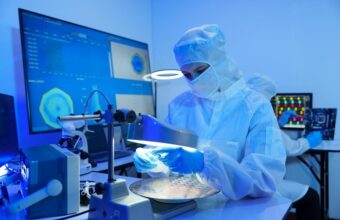
- UC San Diego has opened the first good-manufacturing-practices (GMP) cleanroom on a U.S. university campus that lets researchers take medical device inventions from prototype through FDA-ready manufacturing under one roof, speeding the path to clinical trials and regulatory approval.
- Researchers are exploring an experimental cancer drug inspired by rare cases where tumors naturally stop growing, with early lung cancer trials showing tumor stabilization—and one complete remission.
- UCSF researchers created a faster test that pairs AI from medical records with a lung-fluid genetic marker to spot deadly infections in ICU patients with ~96% accuracy, cutting the need for unnecessary antibiotics.
Recent News
- First-of-its-kind Cleanroom Turns Inventions into Devices Ready for FDA Approval
UC San Diego Today – January 26, 2026
The first good manufacturing practices facility located on a university campus in the United States opened this fall at the University of California San Diego. The space is dedicated to building devices that can be implanted in the human body – especially for neurological applications. Located at the UC San Diego Jacobs School of Engineering, the facility meets strict standards and regulations needed for approvals by the Food and Drug Administration for devices implanted in the human body. “In this laboratory, we’re able to take innovations throughout the whole UC San Diego ecosystem, from engineering to medical sciences to neurosciences, and put it all together and get our prototypes toward larger animal testing and clinical trials for FDA approvals,” said Shadi Dayeh, a UC San Diego electrical and computer engineering professor. - Gilead’s Trodelvy plus Keytruda shows positive results in metastatic breast cancer
PMLive – January 26, 2026
Gilead has announced full results from its study of Trodelvy (sacituzumab govitecan) plus Keytruda (pembrolizumab) as a first-line treatment for patients with metastatic triple-negative breast cancer (TNBC). The results were published in The New England Journal of Medicine. The phase 3 ASCENT-04/KEYNOTE-D19 study evaluated the treatment combination’s efficacy and safety in patients with locally advanced or metastatic TNBC whose tumours express programmed death-ligand 1 (PD-L1). The trial met its primary endpoint of progression-free survival (PFS), demonstrating a 35% reduced risk of progression or death in patients treated with Trodelvy-Keytruda compared to those receiving Keytruda and chemotherapy, which is the current standard of care. The median PFS for the Trodelvy-Keytruda group was 11.2 months, whereas in the Keytruda-chemotherapy group, it was 7.8 months. - AAP Releases 2026 Child Vax Schedule, No Longer Endorses CDC’s Versio
MedPage – January 26, 2026
The American Academy of Pediatrics (AAP) released its 2026 childhood and adolescent immunization schedule, which continues to recommend routine immunization for protection against 18 diseases. The AAP’s 2026 recommendations remain largely unchanged from prior guidance the organization released in August 2025. However, they notably differ from the CDC’s list of recommended vaccines, which was dramatically downsized earlier this month. “At this time, the AAP no longer endorses the recommended childhood and adolescent immunization schedule from the Centers for Disease Control and Prevention,” Sean O’Leary, MD, MPH, chair of the AAP Committee on Infectious Diseases, and colleagues noted in a policy statement published in Pediatrics. - The next frontier in weight-loss drugs: one-time gene therapy
The Washington Post – January 24, 2026
When Harith Rajagopalan considers the millions of patients who have taken a GLP-1 drug to treat diabetes or obesity, he sees a revolution that is failing to realize its promise. “We are literally lighting tens of billions of dollars on fire,” he said. Rajagopalan is referring to studies showing that most patients stop taking GLP-1 medications within a year or two, preventing them from reaping the long-term benefits like reducing cardiovascular risk. A cardiologist by training, Rajagopalan believes there’s a better way to harness the benefits of GLP-1 drugs: a gene therapy that, with a single infusion, can program the body to make more of the GLP-1 hormone naturally for years. Rajagopalan is the co-founder of a small biotech firm making a long-shot bid to disrupt the booming weight-loss industry. - Some Immune Systems Defeat Cancer. Could That Become a Drug?
The New York Times – January 22, 2026
Is there a way to use the body’s way of fighting cancers to make a new drug? Perhaps, according to preliminary research studies. The idea is to exploit what is known about the growth of cancers. While many grow and spread and are deadly without treatment, some go away on their own or simply do not progress. They remain in the body, harmless and causing no symptoms. It’s contrary to conventional wisdom. But Dr. Edward Patz, who spent much of his career researching cancer at Duke, has long been intrigued by cancers that are harmless and has thought they might hold important clues for drug development. - 4 Next-Gen Candidates That Could Form the Future of Alzheimer’s Treatment
BioSpace – January 19, 2026
The development of treatments for Alzheimer’s disease has been marked by consistent disappointment, with a demoralizing 99% candidate failure rate. However, recent market entrants—beginning with Biogen and Eisai’s ill-fated Aduhelm, then their more prosperous Leqembi and Eli Lilly’s Kisunla—have defied these odds. With proof that progress is possible in this space, a new wave of treatments has emerged in the early-stage pipeline. Many of these candidates are taking novel approaches to the disease, whether through gene silencing, antisense platforms or improved drug-delivery technologies. Having various modalities with different targets coming through the pipeline could be especially important as the treatment landscape matures, with a combination of approaches likely to be key to managing Alzheimer’s disease, Patrick Trucchio, managing director of Equity Research at H.C. Wainwright, told BioSpace. - US FDA approves Fortress Bio and Zydus’ treatment for a rare pediatric disease
Reuters – January 13, 2026
The U.S. Food and Drug Administration approved Fortress Biotech and Indian drugmaker Zydus Lifesciences’ drug for children with a rare genetic disorder that impairs copper absorption, Fortress said. The drug, branded as Zycubo, is approved to treat Menkes disease, where patients are born without the ability to absorb copper from their diet. It is caused by mutations in a particular gene that is responsible for the transport of copper throughout the body. The approval makes it the first drug on the market to treat this disease in the United States. Symptoms of this condition include sparse and de-pigmented hair, seizures and developmental delays. If left untreated, many patients die between the ages of two and three years. - Personalizing Cancer Treatments Significantly Improve Outcome Succes
UC San Diego Health – January 8, 2026
Researchers at University of California San Diego School of Medicine have led the first clinical trial in the world to show that cancer drug treatments can be safely and effectively personalized based on the unique DNA of a patient’s tumor. The study results, published in the January 8, 2026 online edition of Journal of Clinical Oncology found that individualizing multi-drug treatments to each patient’s specific tumor mutations using molecular testing can significantly enhance treatment success. “Every patient and every cancer is unique, and so should how we treat for them,” said Jason Sicklick, MD, senior author of the study, professor of surgery and pharmacology at UC San Diego School of Medicine and surgical oncologist at UC San Diego Health. - GSK’s ‘functional cure’ for hep B proves worth in phase 3 trials setting up approval push
Fierce Biotech – January 7, 2026
GSK’s potential “functional cure” for hepatitis B drug has proven its worth in a pair of hotly anticipated phase 3 studies, setting up the pharma for a push to the FDA. The British drugmaker had been evaluating the Ionis Pharmaceuticals-partnered antisense oligonucleotide, called bepirovirsen, in a pair of late-stage studies for chronic hepatitis B (CHB) spanning more than 1,800 patients in 29 countries. The trials, dubbed B-Well 1 and B-Well 2, met their primary endpoints by demonstrating a statistically significant and clinically meaningful higher functional cure rate for bepirovirsen and the current standard of care of nucleos(t)ide analogues versus standard of care alone among patients with baseline hepatitis B surface antigen (HBsAg) of less than 3,000 IU/ml. - A New Way to Diagnose Deadly Lung Infections and Save Lives
UCSF – January 5, 2026
Lung infections like pneumonia are among the world’s top killers — but diagnosing them is notoriously hard. Now, researchers at UC San Francisco have found a way to identify these infections in critically ill patients by pairing a generative AI analysis of medical records with a biomarker found in samples of lung fluid, in this case the expression of a gene that reduces inflammation. In an observational study of critically ill adults, the combination made a correct diagnosis 96% of the time and distinguished between infectious and non-infectious causes of respiratory failure more accurately than clinicians in the intensive care unit.
Stay informed on the latest news and trends on the economic and health benefits of this industry by visiting the new CABiotech.org.
If you have any questions about hosting informational briefings for your colleagues serving in the legislature, contact California Biotechnology Foundation Executive Director Patty Cooper at (916)764-2434 or [email protected].