
Monthly Newsletter
CBF Hosts Legislative Staff Briefing and Highlights Breast Cancer and Lung Health Advances
October 2026
CBF Hosts Legislative Staff Briefing on California’s Life Science Industry
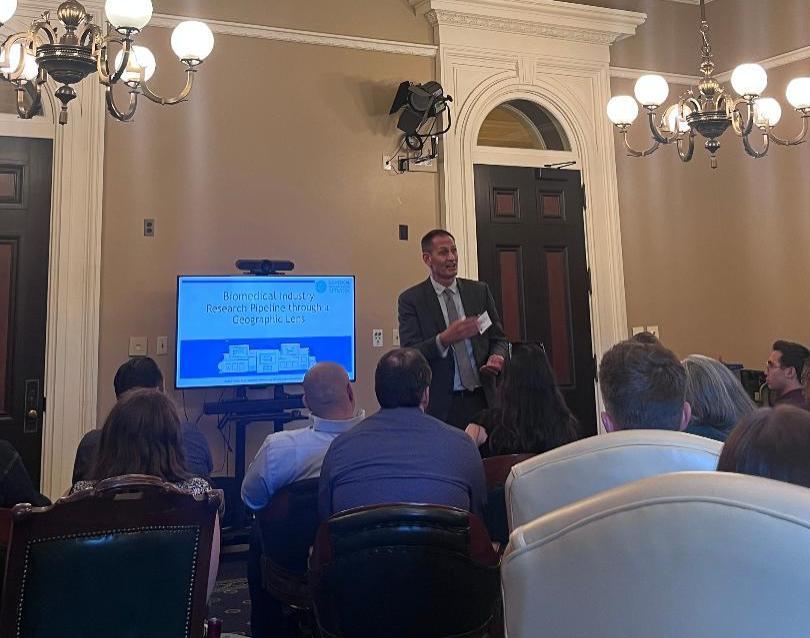
The California Biotechnology Foundation (CBF), in partnership with Assemblymember Christopher Ward, Chair of the Select Committee on Biotechnology and Medical Technologies, hosted a legislative staff briefing at the State Capitol to explore California’s life science industry, its economic contributions and the policies shaping its future.
Titled California’s Life Science Advantage: Industry Landscape & Economic Impact, the briefing featured Claire Conlon, Senior Director of State Government Affairs at Biocom; Asher Lisec, Vice President of Western Region, State Advocacy at PhRMA; and Gregory Theyel, Ph.D., Director of the Biomedical Manufacturing Network.
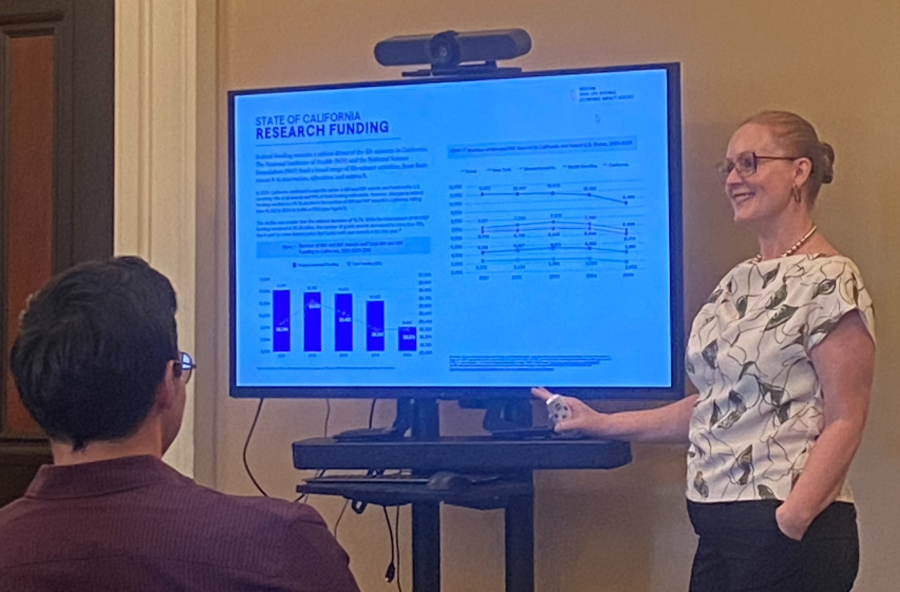
Presentations and discussions examined the journey from scientific discovery to approved treatments, the pressures facing biomedical research and development, including pricing and federal funding, and the importance of supporting continued innovation. Speakers also discussed policy considerations affecting patient access and the state’s ability to remain a leader in life science research and development.
As the second-largest industry in the world’s fourth-largest economy, California’s life science sector contributes to the state’s economic strength, supports local communities and drives advances that improve and save lives globally. Maintaining that leadership requires ongoing dialogue between industry experts and policymakers as they navigate an evolving research, funding and regulatory landscape.
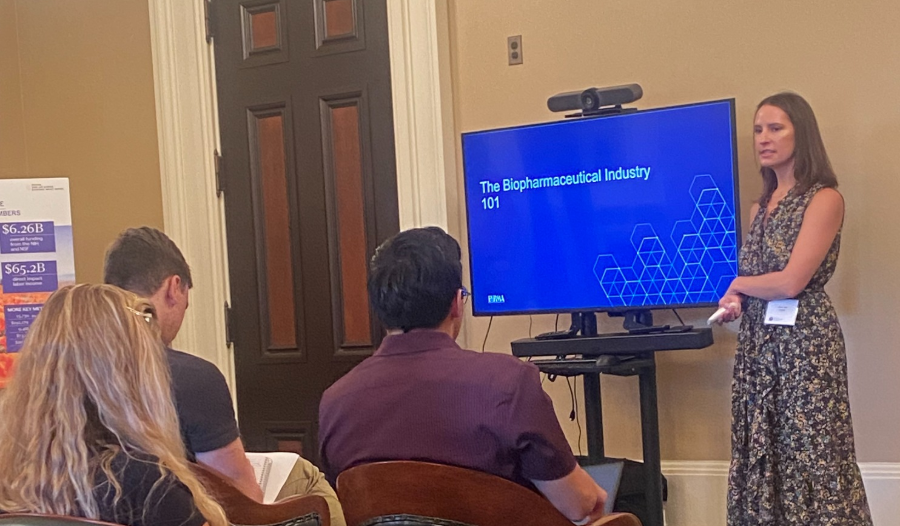
CBF appreciates the interest and engagement of legislative staff and looks forward to continuing to serve as a resource for policymakers working to strengthen California’s life science ecosystem and advance patient access to treatment.
Learn more about CBF and California’s life science industry at cabiotech.org.
Breast Cancer Awareness Month & Healthy Lung Month: New Treatments Bring Hope
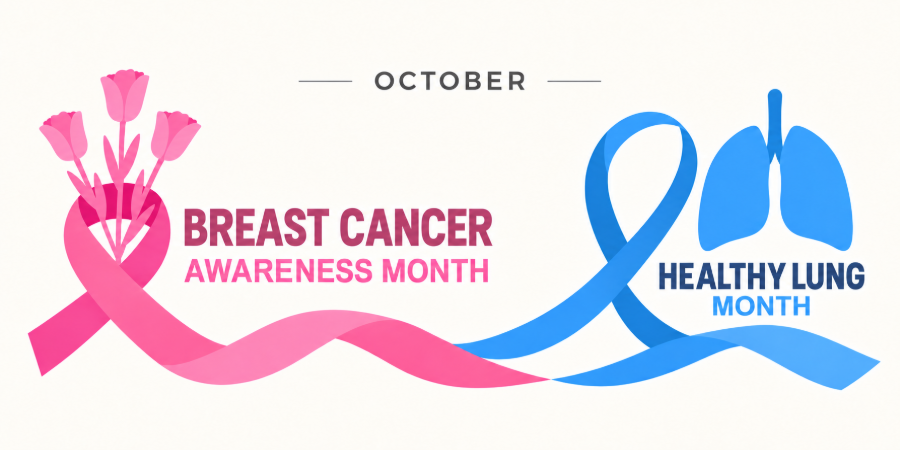
October is a time to recognize Breast Cancer Awareness Month and Healthy Lung Month, honor patients and survivors, remember loved ones lost to cancer, and celebrate scientific advances bringing new hope. Life science research is transforming cancer care through more personalized treatments and expanded options for patients.
According to the American Cancer Society, breast and lung cancers continue to affect millions of Americans. In 2026, an estimated 324,580 individuals in the United States will be diagnosed with breast cancer, and approximately 42,670 will die from the disease. Lung cancer remains the leading cause of cancer death in the United States, with nearly 229,410 new cases and 125,000 deaths expected this year.
Disparities persist, too. Black women are more likely to die from breast cancer than white women, underscoring the importance of equitable access to screening, timely diagnosis and effective treatment.
Recent advances demonstrate how scientific discovery is expanding options for patients. Just this month, Pfizer received FDA approval for TUKYSA (tucatinib) in combination with trastuzumab and pertuzumab as a maintenance treatment for adults with advanced HER2-positive breast cancer following initial treatment. This chemotherapy-free option may help delay disease progression and illustrates how continued innovation is expanding treatment choices for patients. Genentech’s Herceptin, a HER2-targeted therapy, transformed treatment for HER2-positive breast cancer, significantly improved survival and helped make cures possible for many patients with early-stage disease. In September 2026, the FDA also granted accelerated approval to AstraZeneca’s ETCAMAH (camizestrant), in combination with certain existing medicines, for eligible patients with advanced breast cancer whose tumors develop a specific genetic mutation during treatment.
Progress in lung cancer care is advancing as well. The FDA expanded approval of HERNEXEOS (zongertinib) by Boehringer Ingelheim Pharmaceuticals in February 2026 and HYRNUO (sevabertinib) by Bayer Healthcare Pharmaceuticals in September 2026 for certain patients with advanced non-small cell lung cancer involving specific HER2 mutations. These targeted medicines provide additional options for patients whose tumors have particular molecular characteristics. Meanwhile, regenerative medicine researchers are exploring ways to grow specialized human lung cells in laboratories, offering future potential to repair damaged lung tissue and restore function. Although still experimental, this research illustrates biotechnology’s potential to move beyond treating disease toward repairing the body.
While no single treatment works for everyone, continued research is creating new possibilities for patients. Early detection remains essential. Recommended breast cancer screenings and lung cancer screening for eligible individuals can help identify disease earlier, when treatment may be more effective. Continued investment in research, clinical trials and diagnostic tools is equally important.
Organizations including Susan G. Komen, the Breast Cancer Research Foundation, the American Cancer Society, the American Lung Association and California-based Carrie’s Touch support research, education, patient services and efforts to address disparities.
This October, the California Biotechnology Foundation recognizes the researchers, clinicians, patients and biopharmaceutical innovators advancing cancer care. Continued discovery, early detection and equitable access to treatment will help more patients live longer, healthier lives.
Stay informed on the latest news and trends on the economic and health benefits of this industry by visiting CABiotech.org
If you have any questions about hosting informational briefings for your colleagues serving in the legislature, contact California Biotechnology Foundation Executive Director Patty Cooper at (916)764-2434 or [email protected].